Loading...


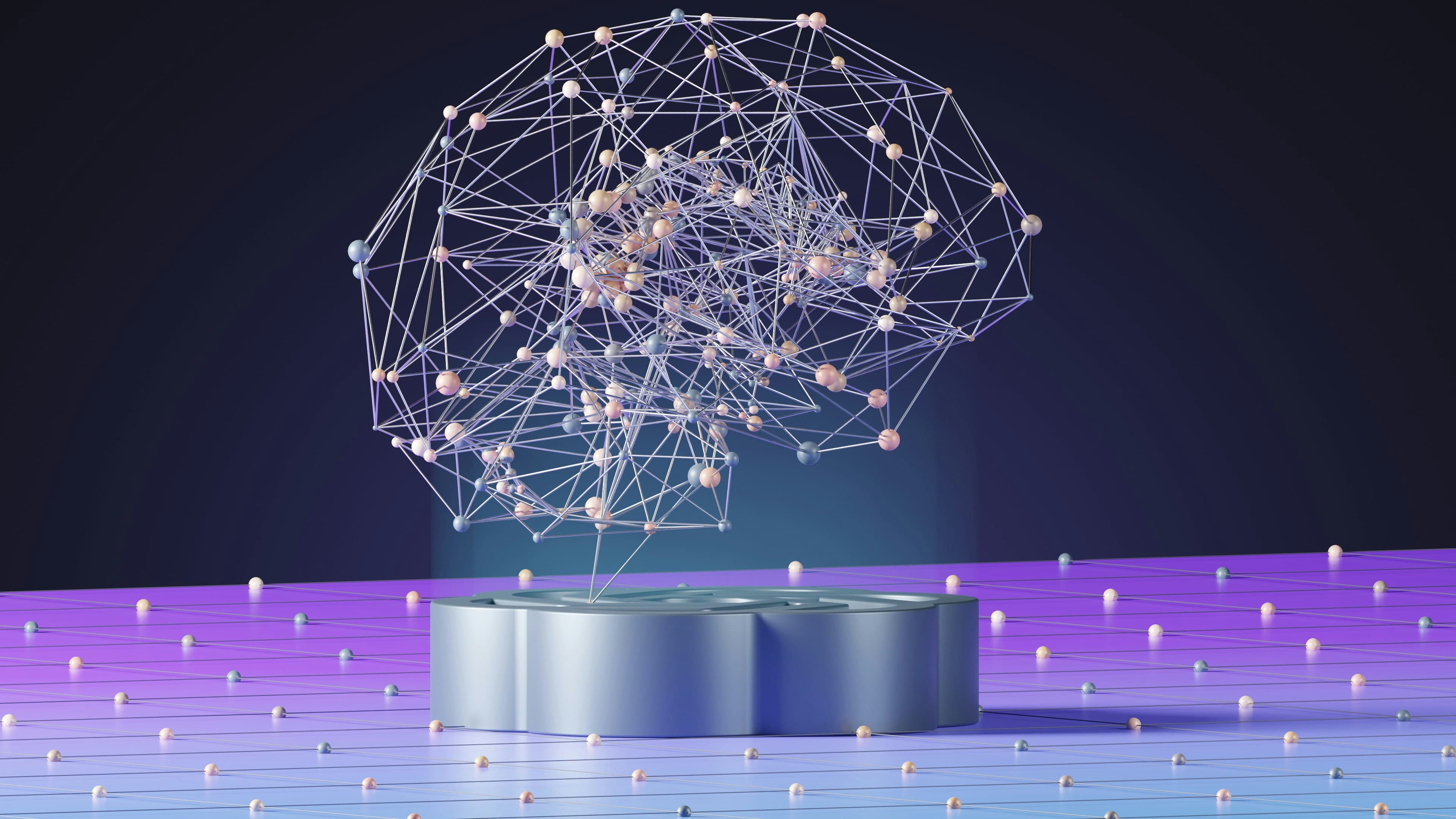
As Global Payments continues to evolve our AI capabilities, we're exploring cutting-edge technologies that go beyond traditional neural networks. One particularly promising area is graph neural networks (GNNs), which offer unique advantages for understanding complex relationships in payment systems, fraud detection, and cybersecurity.
While most people are familiar with traditional neural networks powering tools like ChatGPT and coding assistants, graph neural networks take a fundamentally different approach. Instead of processing data in isolation, GNNs capture the spatial relationships between data points themselves.
Think of it this way: traditional neural networks analyze individual transactions in isolation, while graph neural networks understand the entire payment ecosystem - how merchants connect to customers, how devices relate to users, and how money flows through interconnected networks. This relationship-aware processing makes GNNs particularly powerful for analyzing networks of people, devices, transactions, or any system where connections matter as much as the individual components.
Major tech companies have already been leveraging this technology for years. For example, Facebook uses graph neural networks for friend recommendations by understanding the web of connections between users, and Netflix employs them to suggest content by analyzing viewing patterns across interconnected user groups. In both cases, the relationships between users are just as important as individual user data.
At Global Payments, there are several compelling use cases for this technology across operations, particularly in cybersecurity and fraud detection. In cybersecurity, GNNs can create comprehensive fingerprints of entire network infrastructures.
By modeling the relationships between users, devices, and systems, anomalies can be detected that traditional security tools might miss. This includes identifying lateral movement patterns where attackers hop between connected systems or spotting privilege escalations that only become apparent when viewing the full network context. The key advantage is that GNNs can perform anomaly detection by understanding what normal network behavior looks like across all connected components, not just individual devices in isolation.
The application of graph neural networks to fraud analytics is particularly promising because they excel at identifying complex relationship patterns. Rather than analyzing individual transactions, GNNs can map the connections between merchants, customers, devices, and payment methods to spot coordinated fraudulent activity. This relationship-based approach can reveal sophisticated fraud schemes where bad actors use multiple accounts, devices, or payment methods in coordinated ways that only become apparent when viewed as a connected network.
GNNs work by having each point in the network (like a device or transaction) share information with nearby connected points, building up a comprehensive picture of the entire system. Each node, whether it's a device, user, or transaction, gathers information from connected nodes and shares information back. You can control how far this information sharing extends, typically reaching out from 1-3 degrees of separation. This creates a rich understanding of context where a login attempt doesn't just get evaluated based on the credentials and device used, but is also considered within the broader network of devices, users, and recent activity patterns connected to that attempt.
One of the most encouraging aspects of implementing GNNs at Global Payments is that the existing data infrastructure is already well-positioned for this technology. The relationship data collected in cybersecurity, transaction processing, and merchant onboarding naturally forms the graphs that these networks need to operate effectively. Unlike some AI initiatives that require significant data restructuring, existing data collection processes capture the connections and relationships that make GNNs so powerful.
One of the most significant challenges in applying GNNs involves efficiently processing hierarchical data structures like organizational charts or network topologies. Current approaches require complex mathematical operations that are slow and expensive to compute. Payment networks, organizational structures, and network infrastructures all have inherent hierarchies that require specialized mathematical approaches to model accurately. Traditional GNN implementations use calculus-based methods to handle these hierarchies, but this approach is computationally expensive and can distort the spatial relationships that make these networks so valuable in the first place.
To address these computational challenges, we are exploring an innovative algebraic approach instead of traditional calculus-based methods. CPUs and GPUs handle algebraic operations much more efficiently than calculus-based computations, leading to faster processing and lower costs. The algebraic approach also maintains both data integrity and spatial relationships without the distortions that plague calculus-based methods.
Testing this approach on industry-standard cybersecurity datasets from the Canadian Institute of Cyber Security has yielded compelling results that translate directly to business value. For classification tasks - like distinguishing between false positive and true positive security alerts - the algebraic approach delivered a 43x speed improvement over traditional methods while maintaining high accuracy. This means we could potentially process what currently takes our systems hours to analyze in just minutes.
For anomaly detection scenarios, which are crucial for spotting never-before-seen threats or fraud patterns, an 8x improvement in processing speed was observed. While anomaly detection doesn't have the same accuracy metrics as classification (since you're looking for unknown patterns rather than predefined categories), the speed gains may be significant enough to enable real-time monitoring of entire payment network infrastructures.
These performance improvements aren't just academic - they represent the difference between detecting a security incident after damage is done versus catching it as it unfolds. In the payments business, that time difference can mean the difference between a contained incident and a major breach affecting customer data and payment processing.
Graph neural networks represent a significant evolution in how AI systems understand and process complex relationships. For a company like Global Payments, which operates at the intersection of multiple networks including payment processors, merchant relationships, device connections, and user interactions, the ability to model and analyze these relationships holistically offers tremendous potential.
It's important to note that these capabilities are still in the research phase at Global Payments. These systems are not currently deployed in production, but rather their potential is being explored as the company develops its broader AI strategy. The goal is to understand how GNNs could enhance existing capabilities in fraud detection, cybersecurity, and network analysis.
As Global Payments continues investing in AI and machine learning capabilities, GNNs provide a compelling pathway for developing more sophisticated, relationship-aware systems that can better protect infrastructure and serve customers. The mathematical and computational advances making these systems more practical suggest that the future of AI in financial services will be not just about processing more data, but about understanding the connections that make that data meaningful.
At Global Payments, we’re actively exploring graph neural networks as a fundamentally different approach to understanding the complex, interconnected systems that power modern financial services. By capturing relationships between users, devices, transactions, and systems, they can detect patterns and anomalies that traditional neural networks simply cannot see.
The algebraic approach to modeling hierarchical relationships addresses the computational challenges that have historically limited enterprise adoption of this technology. With dramatic improvements in processing speed, these systems are becoming practical for real-world deployment in cybersecurity and fraud detection scenarios.
The potential benefits of graph neural networks are clear. From creating comprehensive network security fingerprints to identifying sophisticated fraud rings, GNNs could enhance the ability to protect both infrastructure and customers at scale. As Global Payments continues developing its AI strategy, technologies like GNNs will play an increasingly important role in building the next generation of intelligent, relationship-aware financial systems.
Learn more about how Global Payments designs, builds, and operates our systems and engineering organizations, and follow us on LinkedIn to get all the latest news and updates.